
Arc Guide Cage Coming Off or Motion Becoming Rough? Practical Solutions for Crossed Roller Arc Guides
Crossed roller arc guides are designed for precise curved motion in applications that require smooth movement, compact construction, and high positioning accuracy. However, during long-term use, some customers may encounter problems such as cage displacement, cage coming off, roller misalignment, or rough sliding motion.
These problems can affect the smoothness and reliability of the arc guide, especially when the guide is frequently operated or installed in applications with demanding motion requirements.
To improve the reliability of our arc guide products, we have introduced several practical improvements, including a new retainer stop plate, higher-strength hex screws, and improved lithium-soap-based grease.
Common Problems with Crossed Roller Arc Guides
When an arc guide does not operate smoothly, several symptoms may appear:
- The cage gradually moves from its original position.
- The cage may come off during operation or maintenance.
- Roller movement becomes uneven.
- Sliding resistance increases.
- The guide produces abnormal noise during movement.
- The motion feels less smooth than when the guide was newly installed.
These issues can have different causes, including installation conditions, insufficient lubrication, repeated operation, cage movement, or inadequate mechanical restraint.
Understanding the cause is important before replacing the complete arc guide.
1. A New Stop Plate Helps Control Cage Movement
One of the latest improvements to our crossed roller arc guide is the addition of a retainer stop plate.
The stop plate provides an additional mechanical structure to help control the movement of the cage and reduce the risk of excessive cage displacement during operation.
This is particularly useful for applications where the arc guide is repeatedly moved through its curved travel range.
The new structure is designed to improve the stability of the cage while maintaining the smooth movement expected from a precision crossed roller arc guide.
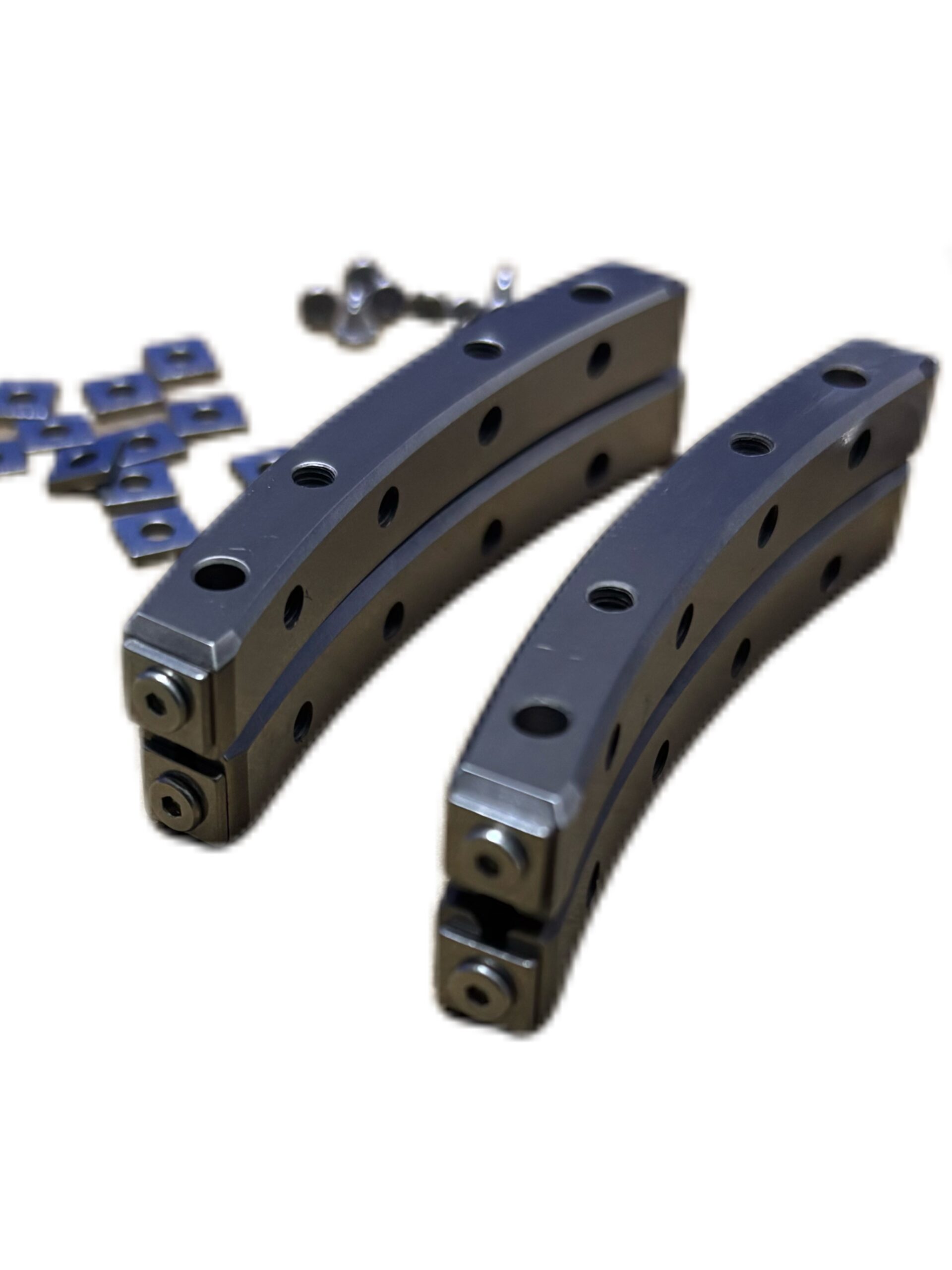
Image Title: Arc Guide with New Retainer Stop Plate
Alt Text: Crossed roller arc guide with new retainer stop plate
The stop plate is not simply an additional component. It is part of our effort to improve the practical reliability of the arc guide during long-term use.
2. Higher-Strength Hex Screws for Better Mechanical Stability
Mechanical fastening is another important factor in the long-term stability of a precision guide.
For the updated arc guide design, we have also changed to higher-strength hex screws.
A stronger fastening solution helps maintain the stability of the guide structure and reduces the possibility of loosening under repeated operation.
For precision motion components, every structural detail matters. A stable fastening system helps the arc guide maintain its intended geometry and operating condition.
3. Improved Lithium-Soap-Based Grease for Smoother Motion
Lubrication also plays an important role in the performance of crossed roller arc guides.
Insufficient or unsuitable lubrication can increase friction and sliding resistance, resulting in rougher movement and abnormal noise.
We have therefore selected an improved lithium-soap-based grease for the updated arc guide.
Proper lubrication helps reduce friction between the rollers and guide surfaces and supports smoother movement during repeated operation.
However, lubrication should always be selected according to the actual operating conditions, including speed, load, temperature, and application environment.
4. A Practical Combination of Structural and Lubrication Improvements
The performance of an arc guide does not depend on one component alone.
The new stop plate, stronger hex screws, and improved grease work together to address several practical factors that can affect the operating condition of an arc guide.
The goal is to provide:
- Better cage stability
- Reduced risk of excessive cage displacement
- More reliable mechanical fastening
- Smoother roller movement
- Reduced sliding resistance
- Better suitability for repeated curved motion
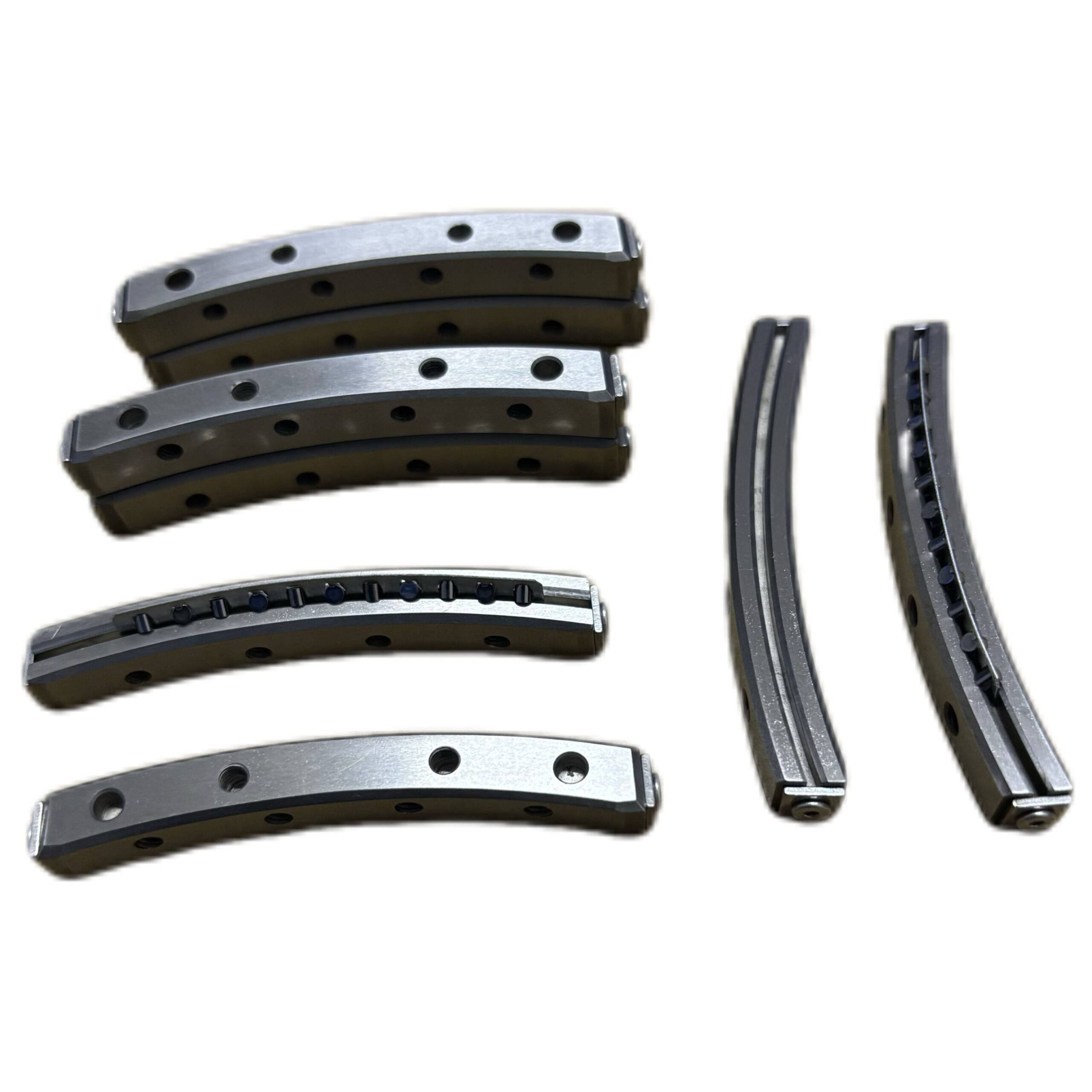
Image Title: Crossed Roller Arc Guide
Alt Text: Crossed roller arc guide for curved precision linear motion
Our crossed roller arc guides are designed for applications requiring precise curved linear movement and compact guideway construction.
5. Real Product Design for Precision Motion Applications
A precision guide should not only perform well when it is new. Its structure should also be designed with long-term operation and maintenance in mind.
Our arc guide development focuses on practical improvements based on actual product use and customer requirements.
The updated design combines the curved guideway, crossed roller arrangement, cage control structure, improved fastening components, and suitable lubrication into one complete solution.
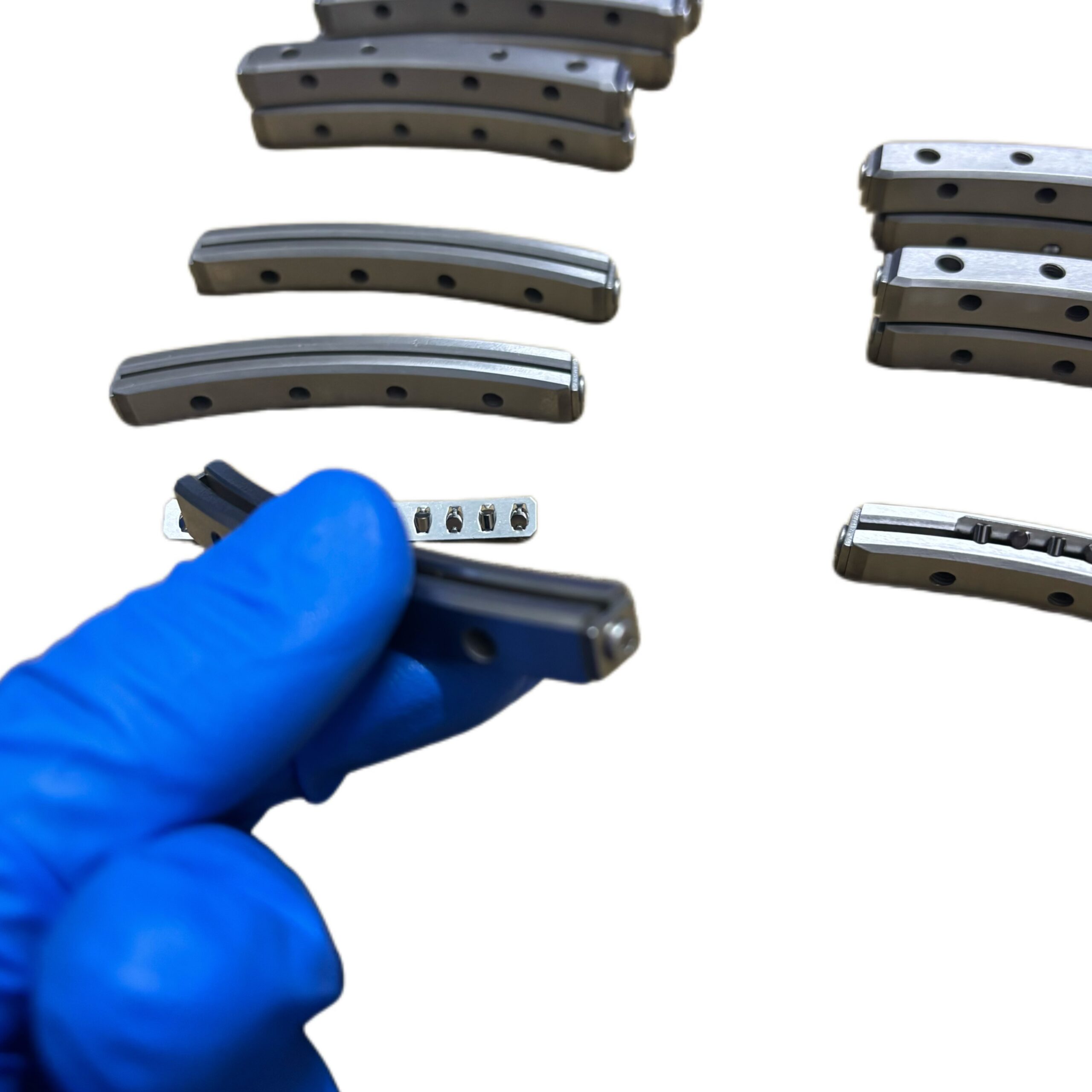
Image Title: ZOTIK Crossed Roller Arc Guide in Hand
Alt Text: ZOTIK crossed roller arc guide for precision curved motion
The actual product shown above demonstrates the compact construction and practical design of the ZOTIK crossed roller arc guide.
When Should an Arc Guide Be Replaced?
If an existing arc guide has already experienced serious cage damage, roller loss, permanent deformation, or abnormal wear, simply adding lubrication may not solve the underlying problem.
However, if the guideway and rollers are still in good condition, checking the following items may be worthwhile:
- Check whether the cage has shifted from its normal position.
- Check the condition of the rollers and guide surfaces.
- Check whether the fastening screws are secure.
- Check whether the guide has sufficient and suitable lubrication.
- Check whether the cage stop structure is appropriate for the application.
For a damaged or severely worn guide, replacement of the relevant components or the complete guide assembly may be a better solution.
ZOTIK Crossed Roller Arc Guides
ZOTIK provides crossed roller arc guides for precision curved motion applications.
Our arc guide solutions are suitable for equipment and mechanisms that require compact construction, smooth movement, and accurate curved positioning.
If you are experiencing arc guide cage displacement, cage coming off, rough movement, roller misalignment, or abnormal sliding resistance, please contact us with your application requirements.
We can evaluate the operating conditions and recommend a suitable arc guide solution.
ZOTIK – Crossed Roller Guides for Precision Motion Applications