
Cross roller guide cage replacement can be a cost-effective repair solution when the guide rails and rollers are still in serviceable condition.
A damaged cage does not always mean that the entire crossed roller guide must be replaced.
In many precision machines, the guide rails and rollers may still be in usable condition even when the cross roller guide cage has become worn, deformed, broken, or displaced.
In this situation, identifying and replacing the cage may offer a much more economical repair option than purchasing a complete new guideway.
This is especially relevant for older equipment, discontinued guide models, imported machines, and applications where long spare-part lead times can cause expensive downtime.
What Does the Cross Roller Guide Cage Actually Do?
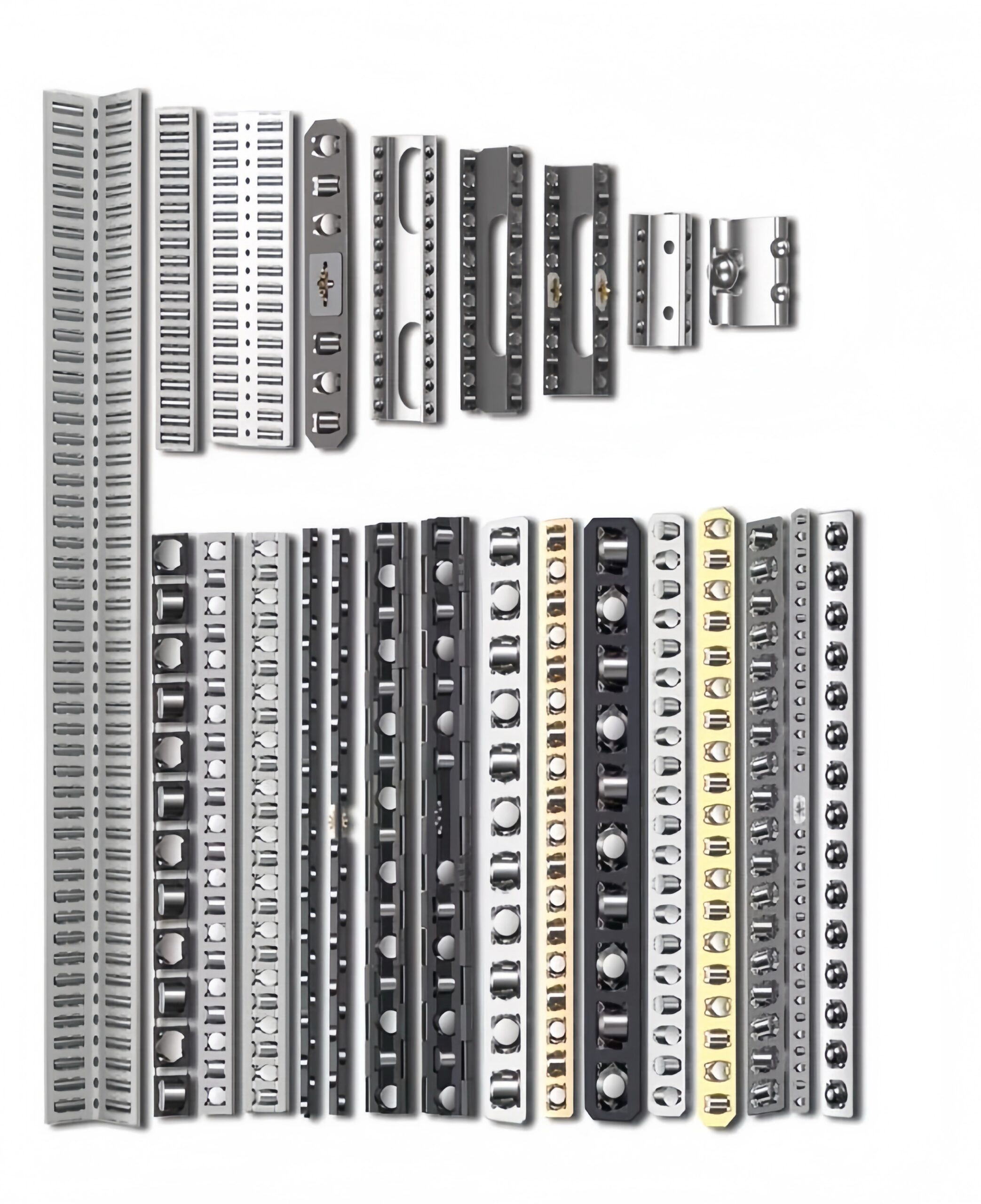
In a crossed roller guideway, cylindrical rollers are arranged alternately at 90 degrees between precision V-shaped raceways.
The cage keeps these rollers correctly separated and oriented during reciprocating motion.
Although the cage itself does not carry the full machine load in the same way as the rollers and raceways, its condition has a major influence on stable roller positioning and smooth movement.
A damaged or displaced cage may eventually lead to irregular motion, increased resistance, abnormal noise, or roller misalignment.
Why Do Cross Roller Guide Cages Fail?
Cage damage is usually the result of operating conditions rather than one single event.
Common causes include repeated short-stroke motion, high acceleration, vibration, impact, incorrect preload, lubrication deterioration, contamination, and mounting inaccuracies.
One important issue is cage creep.
During repeated reciprocating motion, the cage may gradually move away from its original position. This tendency can become more noticeable in applications involving vertical installation, high acceleration, uneven loading, or insufficient mounting rigidity.
If the cage continues to migrate, it may eventually contact an end structure or move outside its optimum operating position.
This is why cage position should be checked during maintenance rather than only after complete cage failure occurs.
Before Replacing the Entire Guideway, Check These Three Components
When cage damage is found, we recommend inspecting three areas separately:
1. Raceway condition
Check the V-shaped raceways for visible indentation, pitting, flaking, corrosion, or abnormal wear.
2. Roller condition
Inspect the rollers for surface damage, dimensional wear, rust, or uneven rolling marks.
3. Cage condition
Determine whether the cage itself is cracked, deformed, worn, displaced, or unable to maintain the correct roller pitch.
If the raceways and rollers remain in good condition and the damage is mainly limited to the cage, replacing the complete guideway may not be necessary.
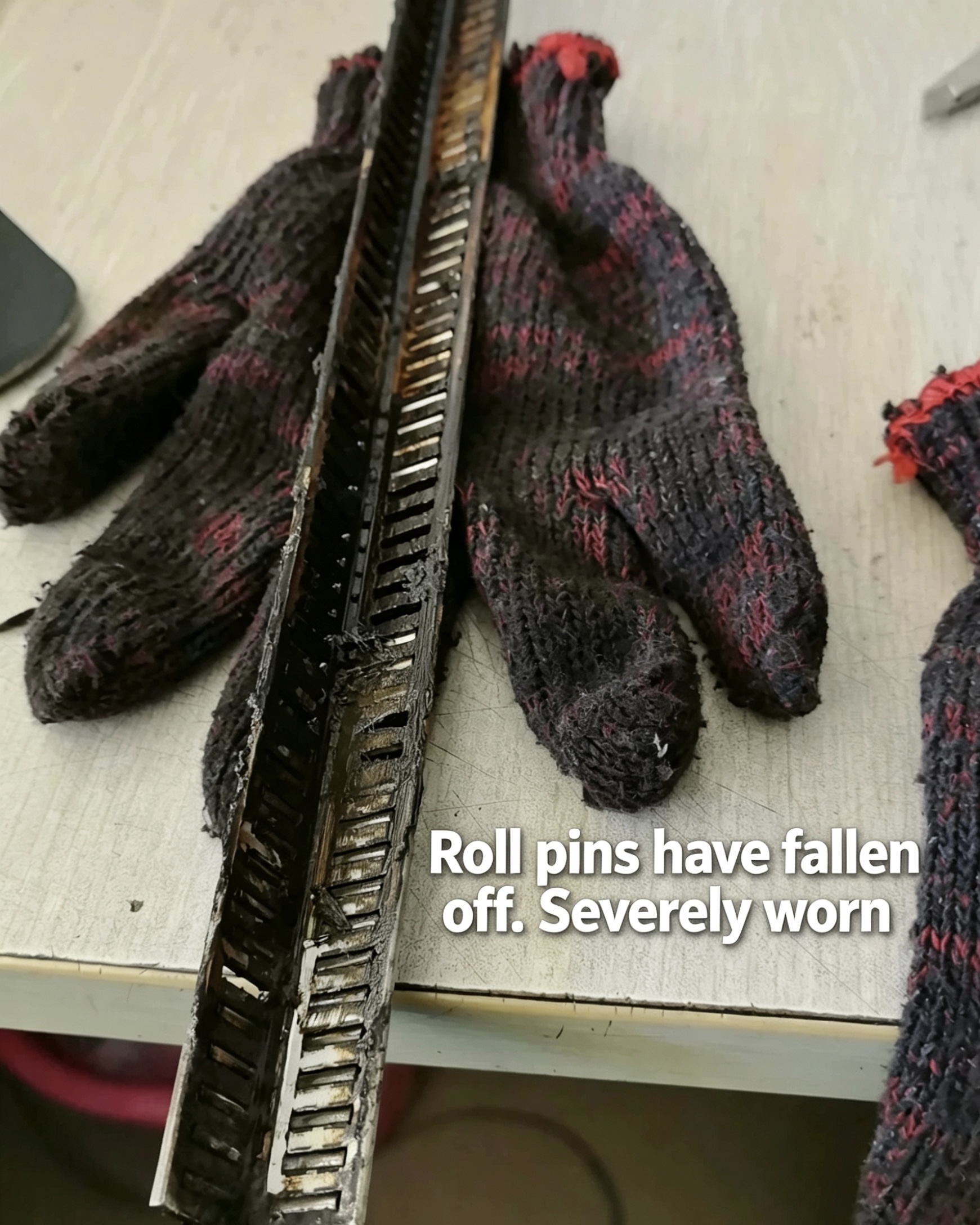
In this customer case, the original cage showed severe wear and roller loss. Before recommending a full guideway replacement, the rail and roller condition should first be evaluated to determine whether a compatible replacement cage can restore the system.
When Is Cross Roller Guide Cage Replacement a Good Option?
A damaged cage does not always mean the complete crossed roller guideway has reached the end of its service life.
In many repair cases, the guide rails and raceways may still remain usable even though the original cage has already become severely worn, deformed, or partially broken.
Before deciding to replace the entire guideway, it is worth checking:
- Whether the V-shaped raceways have serious indentation, pitting, or flaking
- Whether the guide rails are bent, corroded, or permanently deformed
- Whether the rollers are still reusable
- Whether the original mounting accuracy can still be maintained
- Whether the main failure is concentrated in the cage itself
If the rails and rollers are still in serviceable condition, replacing only the damaged cage may significantly reduce repair cost and machine downtime.
This can be particularly valuable for older equipment, discontinued guide models, and imported machines where original replacement parts may be expensive or difficult to obtain.
Real Case: Replacing a Worn Cage Instead of the Complete Guideway
In one customer case, the original cage had already suffered severe wear and roller loss.
After checking the existing guide components, a replacement cage was evaluated as a more economical repair option than replacing the complete guideway assembly.
The key point is not simply to install a new cage, but to confirm that the original guide rails are still suitable for continued use.
How to Reduce the Risk of Cage Failure Again
Replacing a damaged cage can solve the immediate problem, but the original cause of failure should also be checked.
To help extend the service life of the crossed roller guideway, we recommend paying attention to:
- Correct rail alignment and mounting accuracy
- Appropriate preload
- Stable lubrication conditions
- Protection against dust, chips and contamination
- Excessive acceleration or repeated impact
- Cage position during long-term reciprocating motion
If a replacement cage becomes damaged again within a short period, the problem may not be the cage itself. Rail parallelism, raceway condition, preload, lubrication and operating conditions should be inspected again.
For applications with frequent short strokes, vertical motion or high acceleration, an anti-creep cage or cage control solution may also be worth considering.
Need Help Identifying a Replacement Cage?
If the original model is unavailable, discontinued or difficult to identify, clear photos and dimensional information can often help evaluate a compatible replacement solution.
When contacting us, please provide as much of the following information as possible:
- Original guideway brand and model, if known
- Photos of the damaged cage
- Photos of the complete guideway
- Roller diameter and length
- Cage width and thickness
- Roller pitch
- Overall cage length
The more complete the information, the easier it is to determine whether replacing only the cage is a practical option.
Conclusion
A damaged cross roller guide cage does not always require replacement of the complete guideway.
If the guide rails, raceways and rollers are still in serviceable condition, a correctly matched replacement cage can reduce repair costs, shorten machine downtime and extend the useful life of existing equipment.
The most important step is to identify whether the failure is limited to the cage or caused by a wider problem in the guideway system.
For older machines, discontinued models or difficult-to-source guideways, evaluating a replacement cage can often be a practical and cost-effective repair strategy.